
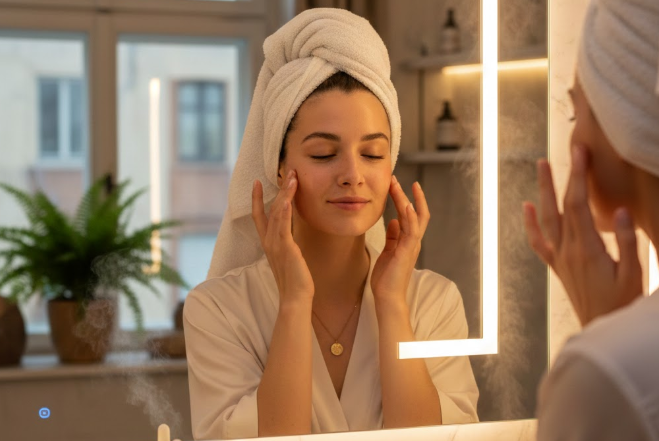
The research institution AAK recently released its 2026 trend report, “A New Era of Wellness, Technology & Authenticity.” The report reveals that the personal care industry is moving away from the singular pursuit of “becoming beautiful” and is officially entering a multidimensional era defined by Wellness × Technology × Emotional Value.
Part 01: Wellness as the New Skincare Aesthetic
According to the report, the market logic of the skincare industry is shifting in 2026. Consumers are no longer merely seeking external cosmetic enhancements; they are prioritizing skincare that fosters “internal health.”
This shift is reflected in the structural upgrade of consumer demand data. An increasing number of products are being developed around cellular renewal, barrier repair, and microbiome balance. In China—a major global cosmetics market—the microbiome skincare market has already surpassed 10.5 billion RMB, with a compound annual growth rate (CAGR) of 26%.
The application of microbiome-friendly ingredients is expanding from facial care to scalp, oral, and body care, creating a cross-scenario ecosystem. Notably, the FDA’s 2025 approval of the first engineered bacterium to treat atopic dermatitis marks a scientific leap from “cosmetic” to “pharmaceutical” grade care, pushing consumer perception of “skin health” from surface-level treatment to ecological balance.
The report warns that brands remaining stuck in shallow narratives of “makeup look” or “skin feel” will struggle to compete in 2026. The core competitiveness of the future lies in integrating products into a holistic wellness framework, upgrading the value proposition from “fixing problems” to “enhancing vitality.”
Part 02: The Era of AI-Personalized Skincare
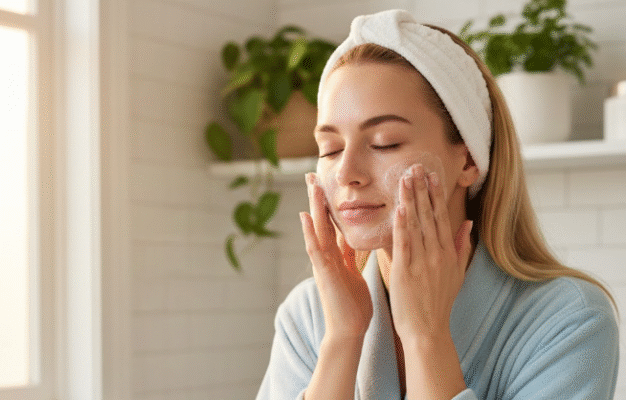
Data shows that mass-market products are rapidly exiting the stage, while niche, high-efficacy products are booming. 2026 will mark the “Inaugural Year of Personalization.” AI technology, which surged in 2025, has moved from concept to industrial implementation, becoming the core infrastructure for next-generation R&D.
In Diagnostics: “Democratizing Professional Experiences”
Haut.AI (Estonia): Their SkinGPT technology allows users to upload a selfie to receive “clinical-grade skin insights.” This allows consumers to simulate the long-term effects of products and visualize potential damage from pollution and UV rays.
PanDerm (Medical AI): By learning from 2.1 million real skin images, its diagnostic accuracy (Top-1 score of 3.6/4.0) has surpassed that of human doctors without AI assistance (2.9/4.0), providing professional-grade assessments at home.
In Custom Formulation: Breaking “Standardized Production”
Cosmax (Korea): Their AI scent molecule prediction model generates exclusive fragrance formulas in 3 seconds based on a user’s lifestyle, emotional preferences, and skin characteristics.
Shiseido: Their pilot “AI Customized Skincare System” analyzes skin type, scalp microbiome, sleep data, and biomarkers to generate unique formulas. IoT devices like smart mirrors and wearable sensors then track skin status in real-time to dynamically adjust ingredient ratios.
Part 03: Inclusivity, Aesthetic Authenticity, and Demographic Expansion
78% of Gen Z consumers prioritize brands that focus on inclusivity, while brands lacking diverse adaptability face a 40% risk of user churn. By 2026, inclusivity has become a “baseline requirement.”
Consumers no longer accept a single definition of beauty. Demand for base makeup for darker skin tones has grown 42% annually, the market for textured/curly hair care has exceeded 8.9 billion RMB, and sensitive skin barrier care maintains a high growth rate of 31%.
The expansion of the men’s care market is particularly noteworthy. The global men’s personal care market is expected to reach $238 billion by 2026 (CAGR of 11.2%). Brands are responding with professional science, addressing structural differences such as higher sebum production (2–3 times higher than women) and thicker stratum corneum through “gender-precise care” lines.
Furthermore, marketing is shifting from “filter aesthetics” to “authentic texture.” Over 65% of consumers trust brands that show real skin. Companies like L’Oréal and Curél have launched “unretouched” campaigns featuring real users of different ages, reinforcing the idea that beauty includes fine lines and spots. The core demand has evolved from “looking beautiful” to “being myself is beautiful.”
Part 04: The Evolution of Clean Beauty
Clean Beauty has transitioned from an optional trend to a market entry barrier. In 2026, simply claiming “natural, safe, and eco-friendly” is no longer enough. 82% of consumers actively research ingredient sources, and 73% demand verified sustainability rather than vague “green” promises.
Brands must provide quantifiable evidence:
Kiehl’s: Their “Ingredient Traceability Platform” allows consumers to scan QR codes to see cultivation sites, harvest times, and lab reports.
Estée Lauder Companies: They have published carbon footprint data for their brands, committing to 100% recyclable or reusable packaging by 2026.
Lush: They utilize third-party Life Cycle Assessments (LCA) to disclose environmental impact data from raw material extraction to disposal.
The report notes that in a market where “everyone claims to be eco-friendly,” only brands with a transparent supply chain, verifiable data, and quantified goals will win.
Part 05: Emotional Value
2026 will be the year “Emotional Care“ enters the mainstream. The boundaries of skincare are extending into “mind-body healing” rituals. 68% of consumers are willing to pay a premium for products that soothe their emotions.
Neurocosmetics is the key trend here. These products focus on the “Skin-Nerve-Emotion” connection, using specific ingredients to regulate neurotransmitters for a dual effect of “topical care + internal emotional comfort.”
Shiseido’s “Senses” Line: Contains GABA, which clinical data shows can reduce skin stress hormone levels by 23% while alleviating anxiety.
Atelier Cologne: Their “Emotional Fragrance Care” uses essential oils like lavender and bergamot that react chemically upon skin contact to provide a simultaneous “skincare + aromatherapy” experience.
Consumers are looking for a daily experience that allows them to slow down and reconnect with themselves. Skincare is transforming from a “task” into a “healing ritual,” helping consumers find moments of peace in a fast-paced world.
Leecosmetic: Using raw materials from internationally renowned companies
Contact: https://leecosmetic.com/contactus/
